
Saturday, May 21, 2011
Male chimpanzees feed less when oestrous females are present

Monday, March 23, 2009


Sunday, January 14, 2007
Out of the Congo

Yesterday my Congo trip came to an end. I boarded a flight from the Kinshasa airport, which took me back across this vast forested country, all the way East to the capital of Kenya, Nairobi.
Now, my slow and round-about return journey back to the Department of Anthropology at Harvard begins.
The blog, intermittent as it was in updates, has also ran its course. In the next few months, an online guide to my pilot research study at Kanyawara, Uganda (chimpanzees) and Kokolopori, DRC (bonobos) will be put together (course workload permitting).
You can check for the latest at: http://www.fas.harvard.edu/~primates/
You should also visit the website of the Bonobo Conservation Initiative, without whose work in developing community-based widlife conservation in the Kokolopori area, and their guidance and support in mounting this long and logistically challenging trip to the Congo, my study of the Hali-Hali bonobos would not have been possible.
Alex
Gallery: The Hali-Hali Bonobos
All images by Alexander Georgiev
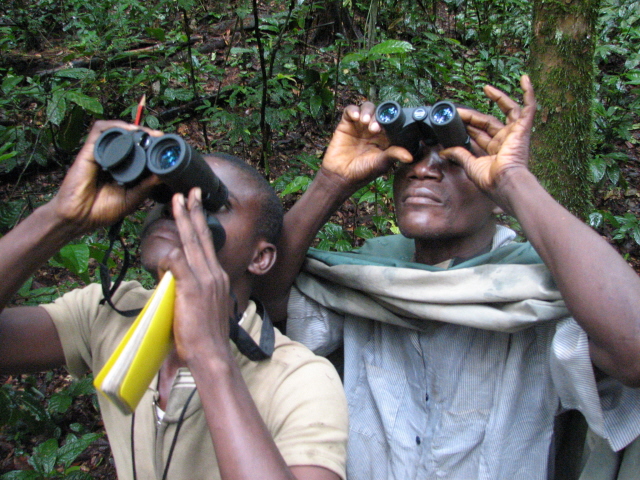 From October to December 2006, with the help of local trackers, I followed the bonobos of the Hali-Hali community at Kokolopori. At this site tracking of bonobos has started back in 2002. Since then the Bonobo Conservation Initiative and their local partner organisation, Vie Sauvage, have worked in this part of the Congo to protect the apes, that traditionally are not hunted by the local people.
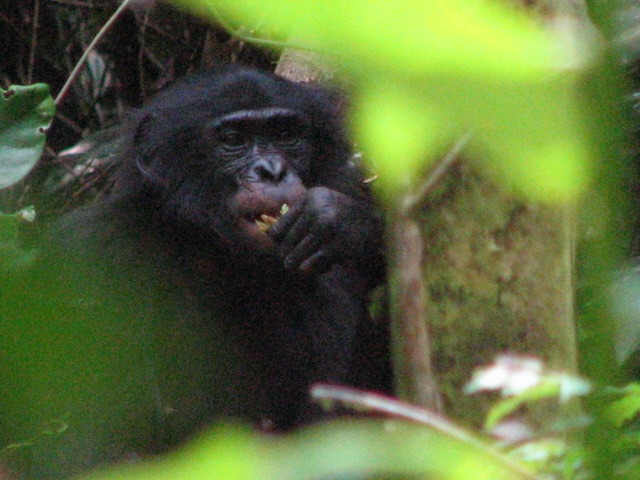 A lot of the time during October - December the bonobos fed on the seeds of a tree, known locally as Waka . They ate them in the canopy, but a lot of time they just foraged for them on the ground, spending hours picking them up from the leaf litter, not travelling very far in between.
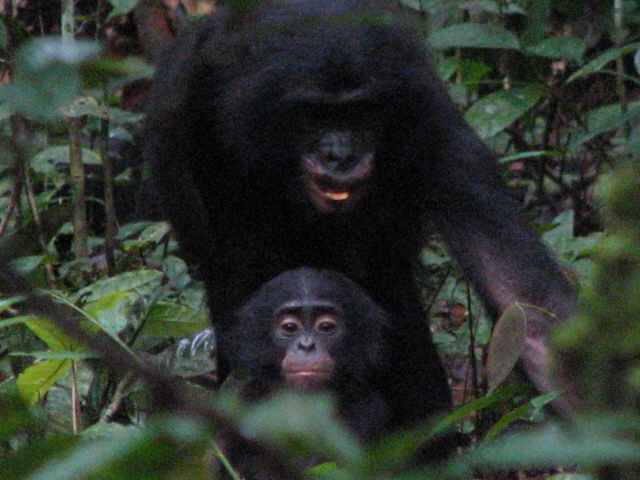 Here a mother feeds on the same Waka seeds, moving slowly as she picks them up, puts them in her mouth and gets rid of the outer husky coating.
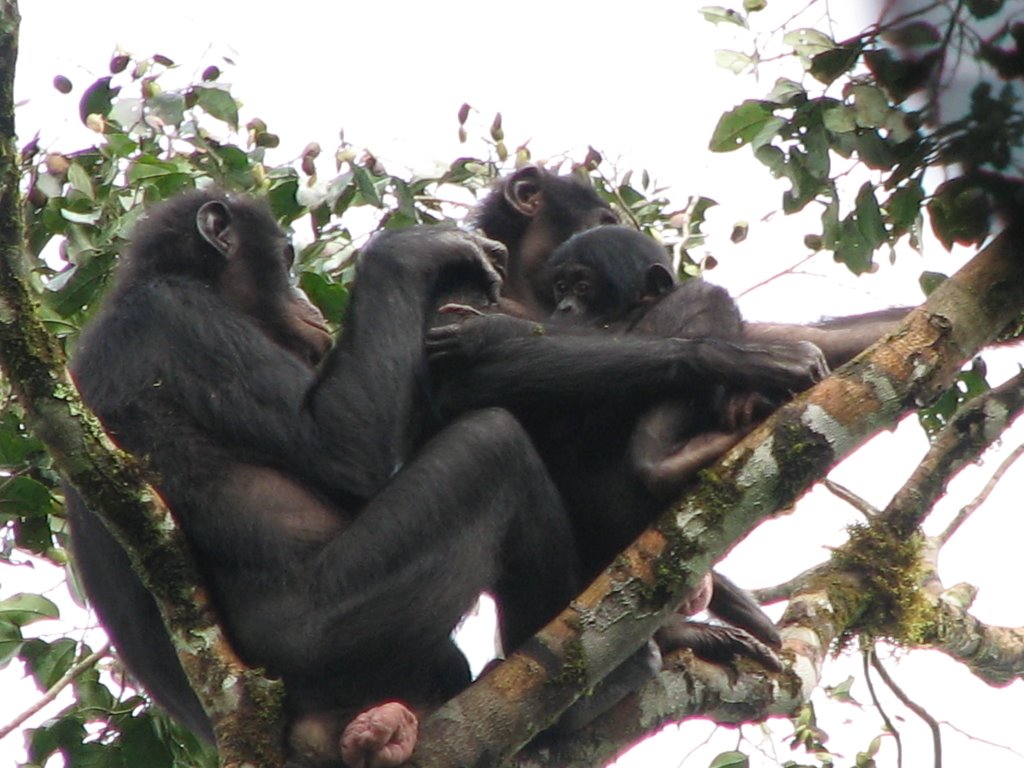 Two mothers having a bit of a grooming. The bonobos on this day spent a couple of hours feeding on the seeds of the Waka tree - not on the ground but up in the canopy. Then some of them had a grooming break.
  A mother bonobo, relaxing. Her baby is just about visible in her lap area.
 The male, who we saw only rarely with the bonobos that we followed. The dominant often chased him. Because of his characteristically long face, I called him, quite unimaginatively, Longface.
 A baby boy. Son of the female that I called Clownface. The area around hers, and her offspring's mouth was very white. Hence the name.
  A juvenile eating the fruit of one of the big trees in the forest - 'Baalanga' in the local language. Known also as Irvingia.
 One of the adult female mothers grooming the dominant male. During the three months at Kokolopori I did not see once a male groom another male. It would be either females grooming one another, or a male-female grooming combination. Big difference to what happens in chimps, where males groom each other a lot.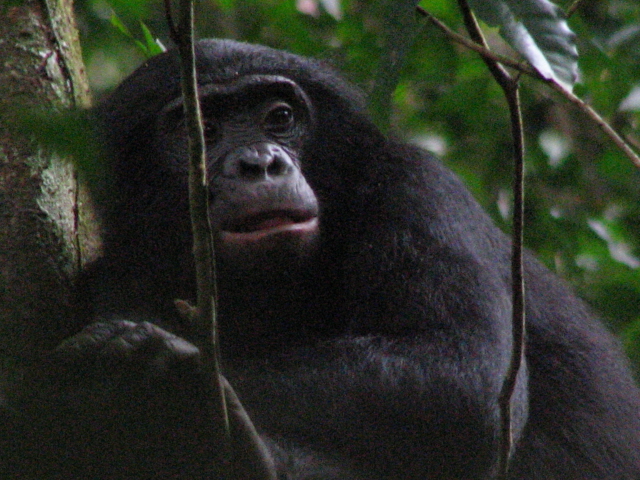
One of the males. During the entire time in the field I saw only 3 different adult males hanging out with the party we followed. Most of the days there were only two of them - Rafaelo, and another, dominant individual who is yet to be named (pictured here).
 The last day that I saw the Hali-Hali bonobos, shortly before Christmas 2006. The entire party, some 5 mothers, 2 young females, 2 adult males and a bunch of juveniles travelled for nearly 1 km along one of the trails we cut in the forest. They were heading straight North towards the area where the primary forest gives way to the agricultural fields of the villagers. There a kind of transitional belt of 'disturbed forest' lays - a thick tangle of terrestrial herbaceous vegetation (THV), often more than 2 m in height, which makes moving around very slow and difficult - especially so for human observers.
Friday, January 12, 2007
Gallery: Leaving Mbandaka
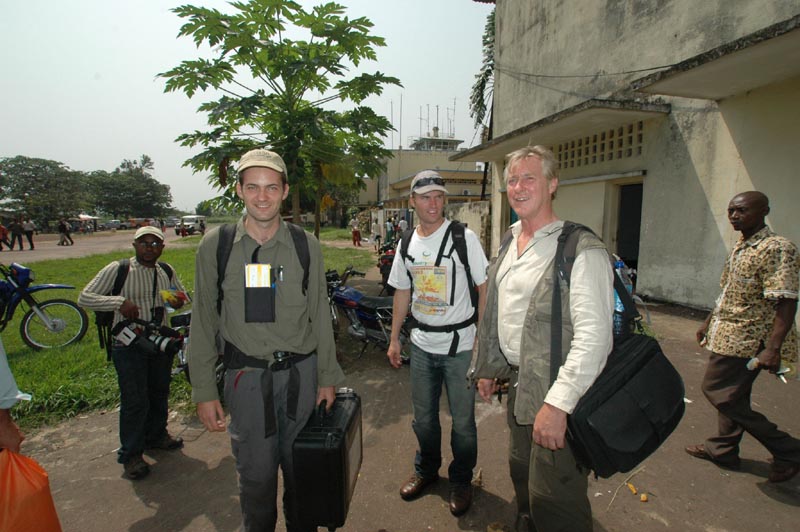
Image: Michael Hurley/BCI
Wednesday, 10 Jan.
With minutes before the Kinshasa flight check-in at Mbandaka airport we gather for yet another photo opportunity. Left to right: Eric of BCI (holding a video camera in the back), Alex (holding a Pelicase full of bonobo fecal samples in tubes), The Doctor (AKA Luke) of Australia, and Michael Hurley, Exec Director of the Bonobo Conservation Initiative. Person far right is an unknown airport-type individual, looking busy.
Gallery: Australians
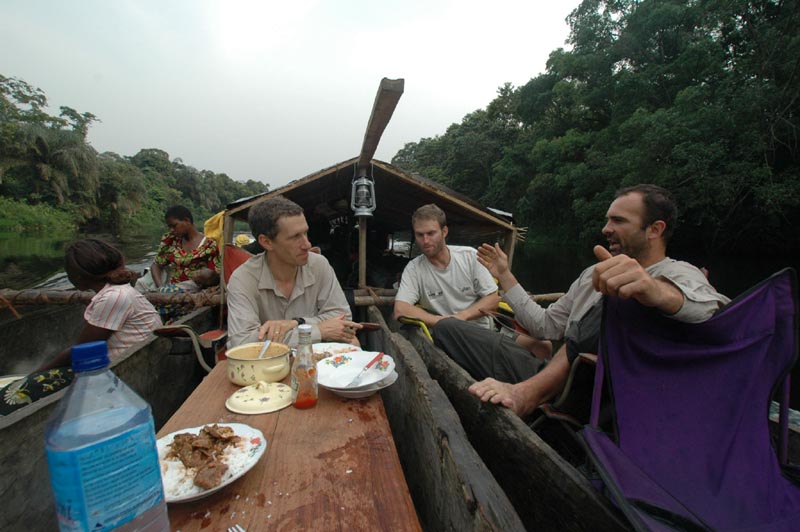
Image: Michael Hurley/BCI
Left to right: Phil, Luke, Angus. Two lawyers and a doctor in between. Obviously having a sophisticated conversation here, having had dinner prepared by lovely Landrine (looking away from the camera on the left). Woman in the back has a little baby and comes from one of the villages of Kokolopori, hitching a ride to Mbandaka. Don't think many people figured what here name is.
Gallery: Misty morning
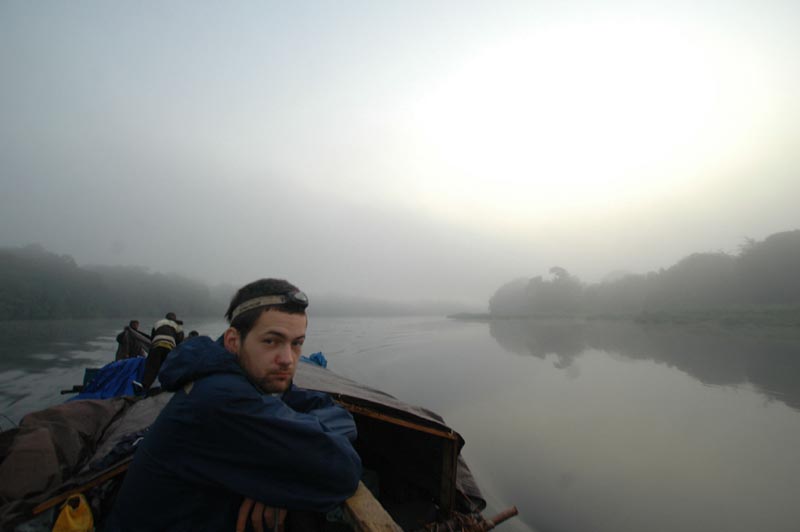
Image: Michael Hurley/BCI
One of the mornings between Saturday and Monday.
We're still travelling on the aptly named "Bonobo" - vessel. With this fog, the heat wave is delayed just a bit.
Gallery: Drifting down the river
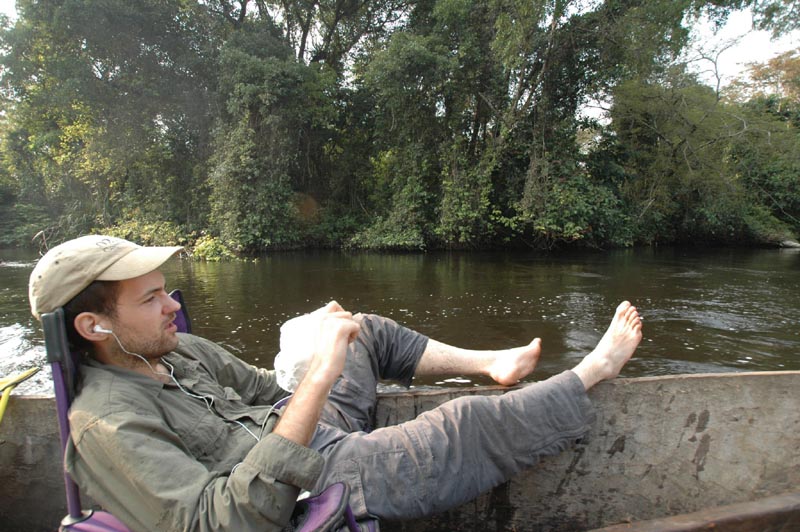
Image: Michael Hurley/BCI
Once we got through the narrowest part of the river, the journey became more enjoyable and calm.
Gallery: Boat accident
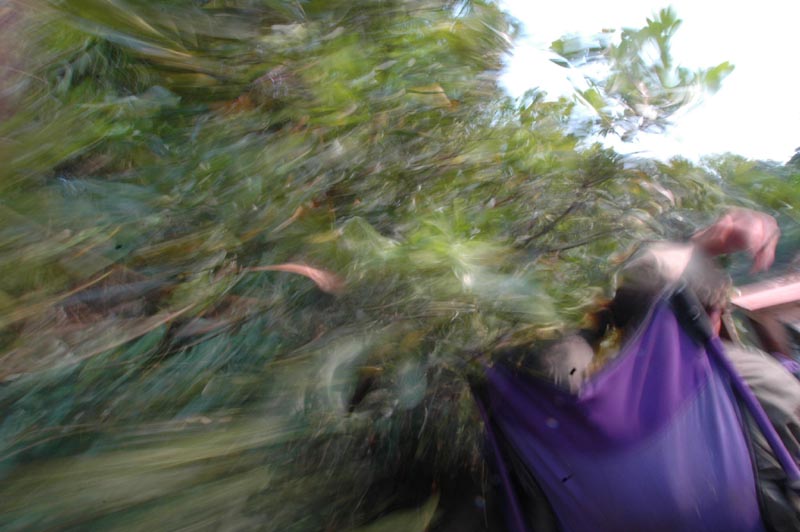
Image: Michael Hurley/BCI
One of the more harmless collisions we experienced with riverine flora shortly after embarking on the return trip down river.
Gallery: At the river
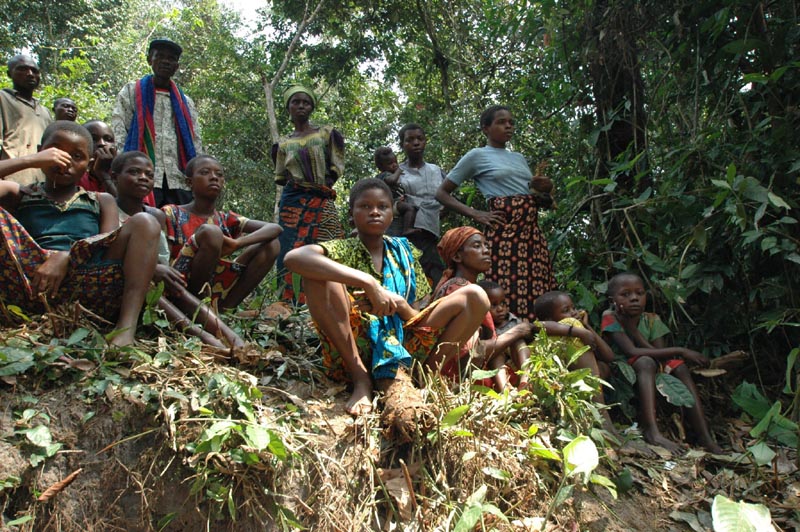
Image: Michael Hurley/BCI
Jan 5th. Leaving Kokolopori. People from the villages are at the bank of the Maringa (Luo) River to see us off. Some of them were hired as porters to get all our luggage from the village of Yalokole to the boats.
Gallery: Nsondo stream
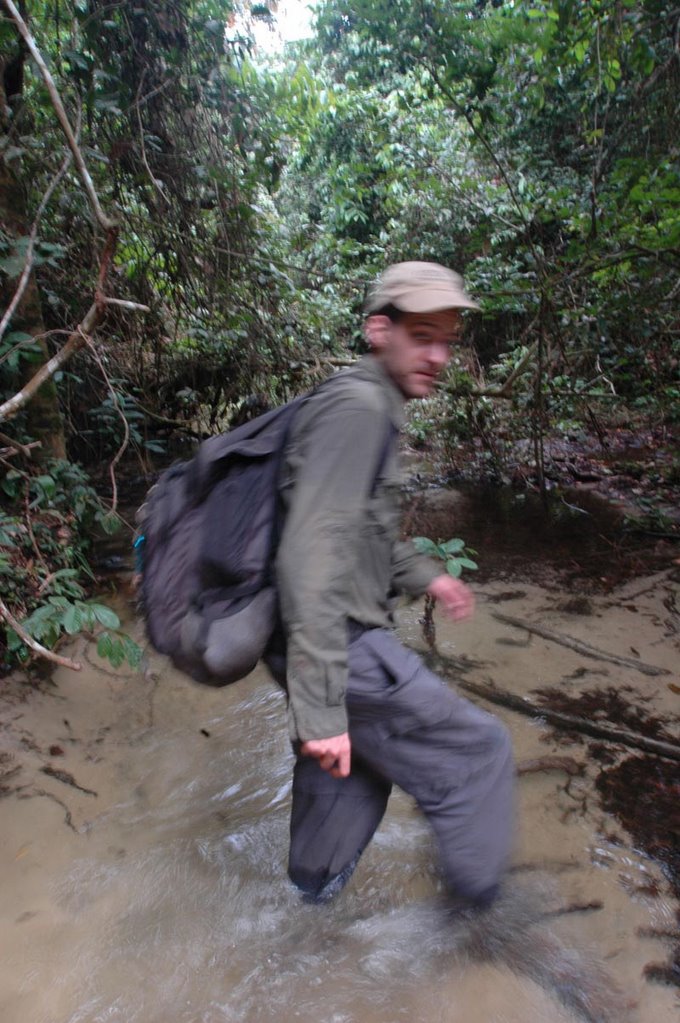
Image: Michael Hurley/BCI
Jan 5th: leaving Kokolopori. Getting even closer to the boats and the river - we cross Nsondo stream. The same stream near which, a little bit further up, back in October I established the small camp, where I was based most of my time at Kokolopori.
Gallery: last minutes in the forest

Image: Michael Hurley/BCI
On the way to the 'libongo' - the little port at the Maringa (Luo) River where the boats wait for us. The foot-path takes us through the very same part of the forest, in which we have been tracking the Hali-Hali bonobos or the past few months. We did not see them on this final walk, though.
Shipping shit:
Kinshasa
Friday Jan 12
All Australian people have now left the house. On their way to their Koala-full country or some other exotic location via Johannesburg. I am still in Kinshasa. There was a power cut a while ago. The air con stopped and the moist heat took over. Spooks, one of the best ever television dramas was on BBC Prime just now. Earlier today I pushed the limits of the Congolese banking system by trying to make a withdrawal from my account after closing time. I have to admit that my attempt was not too successful. They did not give me any money. One of the biggest and poshest hotels here – the Grand did not save my day either. After reading Michaela Wrong’s book “In the Footsteps of Mr. Kurtz” I hoped that this famous all-powerful institution might concede to my pleading for giving me cash from my debit card. But apparently they have some new regulations. The only way they could have made this huge exception was if I booked a room for the night there. Which in itself would have drained my bank account beyond recognition so I decided it’s not worth it. So, now virtually cash-less, I will have to try and dodge my way tomorrow morning through check-in for my flight to Nairobi. Let’s hope the people there will be somewhat relaxed regarding all the excess luggage that, I am afraid, I will be dragging through the airport…
Even earlier today I did something I have never done before. I shipped almost 7 kg of ape shit by DHL (weight includes the packaging). There was a bit of a rush and panic, when the shippers discovered that the special containers for the samples I had collected over the past few months at Kokolopori, were locked away in a storage facility, and the person who had the key was not really there. Things got sorted in the end though, and after some 2 hours in the nice DHL bureau in central Kinshasa, the precious stuff was on its way to the US of A.

All logistical hassles aside, Kinshasa is a lovely town these days. Back in September when I passed through, the tension was palpable. The presidential election were a huge unknown then. Now, after the landmark vote is over in a very mature and peaceful way, Kinshasa is different. Not anything really you can put your finger on, but the air has definitely cleared. The people are somewhat more relaxed. It just feels like a normal place where people go on about their lives without having to worry about the threat of violence engulfing their lives once again. It’s a pleasure to be in Kinshasa and seeing how things are nicely coming back together for the people who against all odds, have somehow managed to pull through all the horrible things that have went on here in this huge, huge city and country.
Friday Jan 12
All Australian people have now left the house. On their way to their Koala-full country or some other exotic location via Johannesburg. I am still in Kinshasa. There was a power cut a while ago. The air con stopped and the moist heat took over. Spooks, one of the best ever television dramas was on BBC Prime just now. Earlier today I pushed the limits of the Congolese banking system by trying to make a withdrawal from my account after closing time. I have to admit that my attempt was not too successful. They did not give me any money. One of the biggest and poshest hotels here – the Grand did not save my day either. After reading Michaela Wrong’s book “In the Footsteps of Mr. Kurtz” I hoped that this famous all-powerful institution might concede to my pleading for giving me cash from my debit card. But apparently they have some new regulations. The only way they could have made this huge exception was if I booked a room for the night there. Which in itself would have drained my bank account beyond recognition so I decided it’s not worth it. So, now virtually cash-less, I will have to try and dodge my way tomorrow morning through check-in for my flight to Nairobi. Let’s hope the people there will be somewhat relaxed regarding all the excess luggage that, I am afraid, I will be dragging through the airport…
Even earlier today I did something I have never done before. I shipped almost 7 kg of ape shit by DHL (weight includes the packaging). There was a bit of a rush and panic, when the shippers discovered that the special containers for the samples I had collected over the past few months at Kokolopori, were locked away in a storage facility, and the person who had the key was not really there. Things got sorted in the end though, and after some 2 hours in the nice DHL bureau in central Kinshasa, the precious stuff was on its way to the US of A.
All logistical hassles aside, Kinshasa is a lovely town these days. Back in September when I passed through, the tension was palpable. The presidential election were a huge unknown then. Now, after the landmark vote is over in a very mature and peaceful way, Kinshasa is different. Not anything really you can put your finger on, but the air has definitely cleared. The people are somewhat more relaxed. It just feels like a normal place where people go on about their lives without having to worry about the threat of violence engulfing their lives once again. It’s a pleasure to be in Kinshasa and seeing how things are nicely coming back together for the people who against all odds, have somehow managed to pull through all the horrible things that have went on here in this huge, huge city and country.
Back to civilisation: Jan 9
Out of the darkness of the night on the vast Congo River the lights of Mbandaka finally came through late yesterday evening. We were approaching what now to me looked like a huge and modern town. After more than three months at Kokolopori, way up stream along the Congo and its tributaries, Mbandaka, this fairly run-down place by any Western standards, was the first point of contact with regular shopping opportunities, beds with pillows, a dripping but adequate shower, and most importantly Internet and emails. Little things but when for three months you don’t get them you can’t help but appreciate them more than you did before.
It’s now Tuesday, the 9th of January. We left the ‘port’ of Kokolopori at around 11 am or so on Friday. It was a fairly dramatic exit, in more ways than one. It is now the dry season and the level of the rivers had dropped significantly. What this means in practical terms and navigating our vessel through the narrow Maringa (also known locally as Luo) river, was a tricky thing to do. Within less than 5 minutes of push off we crashed head on into a thicket of thorny vegetation, growing on the bank. What followed shortly later, downstream from the site of the first crash, was even more extreme. Stressful for some, exciting for others, and painful for our cook, Landrine, who got hit on the head by a tree bough which ripped though and over the right side of the boats. People overboard frantically trying to ease the boats through the tree trap into which we crashed, chainsaw cutting though trees, and all the navigational skills of Le Blanc, the ‘captain’ of the boat, was what it took to get us through this very first stage of the journey back downstream to Mbandaka and the world of refrigerated drinks.
Three guys from Australia – a mix of lawyers, doctors and surfers (or something along those lines), Michael Hurley (the other half of Sally Coxe of the Bonobo Conservation Initiative), the BCI crew, a Congolese researcher, some hitch-hikers, and I were now drifting down the rivers. Amazing misty mornings, absolutely stunning sunsets in the evenings and lots of heat in between. Birds flying around – from one tree to another, darting above the water, just perching on trees at the edge. People, on pirogues, and in settlements along the banks – initially few and far between, but then more and more, the closer we were getting to Mbandaka. Every morning the coals in the boat’s ‘kitchen space’ would be dead. To start the fire anew and make hot water and breakfast we would usually come ashore at one of the small settlements (fishing camps) that we would otherwise drift by. The people there are nice enough and let us have some hot functioning coals. These morning stops along the way also provided us with some basic restroom facilities (a log in the bushes, which people squat on and deposit their digestive waste off its side).At one of these places we also bought a gigantic fish. No idea what it was called but I think it was delicious.
Before this calm drifting journey, there was a lot that went on during October, November and December. Establishing a research camp in the forest of the Hali-Hali bonobos Nsondo Camp was one of the first things I had to do on arrival at Kokolopori. By the way the English translation is Camp Leech (Nsondo = leech, the name of the stream, next to which the camp is situated).
From Nsondo camp the trackers and I followed the bonobos. In one word: amazing. Once I am back in the US, watch out for a special update of the blog with notes and copious amounts of pictures from the field.
Right now I have to think about re-packing all my luggage and preparing for the next leg of the return journey – the flight from Mbandaka to Kinshasa.
It’s now Tuesday, the 9th of January. We left the ‘port’ of Kokolopori at around 11 am or so on Friday. It was a fairly dramatic exit, in more ways than one. It is now the dry season and the level of the rivers had dropped significantly. What this means in practical terms and navigating our vessel through the narrow Maringa (also known locally as Luo) river, was a tricky thing to do. Within less than 5 minutes of push off we crashed head on into a thicket of thorny vegetation, growing on the bank. What followed shortly later, downstream from the site of the first crash, was even more extreme. Stressful for some, exciting for others, and painful for our cook, Landrine, who got hit on the head by a tree bough which ripped though and over the right side of the boats. People overboard frantically trying to ease the boats through the tree trap into which we crashed, chainsaw cutting though trees, and all the navigational skills of Le Blanc, the ‘captain’ of the boat, was what it took to get us through this very first stage of the journey back downstream to Mbandaka and the world of refrigerated drinks.
Three guys from Australia – a mix of lawyers, doctors and surfers (or something along those lines), Michael Hurley (the other half of Sally Coxe of the Bonobo Conservation Initiative), the BCI crew, a Congolese researcher, some hitch-hikers, and I were now drifting down the rivers. Amazing misty mornings, absolutely stunning sunsets in the evenings and lots of heat in between. Birds flying around – from one tree to another, darting above the water, just perching on trees at the edge. People, on pirogues, and in settlements along the banks – initially few and far between, but then more and more, the closer we were getting to Mbandaka. Every morning the coals in the boat’s ‘kitchen space’ would be dead. To start the fire anew and make hot water and breakfast we would usually come ashore at one of the small settlements (fishing camps) that we would otherwise drift by. The people there are nice enough and let us have some hot functioning coals. These morning stops along the way also provided us with some basic restroom facilities (a log in the bushes, which people squat on and deposit their digestive waste off its side).At one of these places we also bought a gigantic fish. No idea what it was called but I think it was delicious.
Before this calm drifting journey, there was a lot that went on during October, November and December. Establishing a research camp in the forest of the Hali-Hali bonobos Nsondo Camp was one of the first things I had to do on arrival at Kokolopori. By the way the English translation is Camp Leech (Nsondo = leech, the name of the stream, next to which the camp is situated).
From Nsondo camp the trackers and I followed the bonobos. In one word: amazing. Once I am back in the US, watch out for a special update of the blog with notes and copious amounts of pictures from the field.
Right now I have to think about re-packing all my luggage and preparing for the next leg of the return journey – the flight from Mbandaka to Kinshasa.
Tuesday, October 17, 2006
FROM ALEX GEORGIEV
Hi guys
Tomorrow is the first and likely the last chance I get to send emails out of
the forest. You will get them, without doubt with some delay. After a
longish but nice boat trip along the rivers here of the Congo we arrived at
the site. Bit pressed for time and all, so just a brief outline of some of
my personal highlights so far: lovely sunsets and huge double rainbows over
the river on the way in; little kids screaming racist greetings at you
everywhere you go; people staring at you most if not all the time;
caterpillars the size of small sparrows being cooked for dinner (I passed);
extremely powerful lotoke a kind of local alcohol that probably in the US
might be used for peeling paint off walls (but here is administered orally
in profusion);being in the centre of a small village rebellion of sorts
aimed at preventing me from entering the forest to see the bonobos (long
storyŠ all down to local politics and petty squabbles over bags of saltŠ).
But all is well that ends well. Bonobos are great, even managed to identify
three of them yesterday. I know that its really bad of me to say so but I
was really pleased to see that those animals had some very characteristic
deformities on their hands making them absolutely distinct from all the
other individuals in the party. By the way another useful feature you
should look out in wild bonobos if you want to tell them apart, as far as
the males go, is the colour of their balls. Some have pink, others have
darkish. Then again, I¹ve heard that some can also be bi-coloured. On this
educational note, I leave you until, probably, January.
Alex,
Yalokole village, DRC
October 3rd 2006
PS: By the way, it¹s very irritating, sitting here in the evening, to have
more than 30 tiny flies crawling all over my laptop screen as I write this.
No doubt the glowing light of the screen is a major of their otherwise
boring day but I wish they get a life and leave my laptop alone!
Tuesday, September 19, 2006
Pre-departure
Its Tuesday morning. We are still in Mbandaka. The boat is almost full to the roof with luggage and provisions so much so that my ...bed for lack of a better word is very close to the roof itself. Hence I cant strech much there. I spent the night on the boat. i thought it will be a bit cooler there than in the stifflingly hot and humid house we are staying. It was a bit cooler but not as much as I hoped for. Presumably once we are on the move there will be a fresh breeze coming through the sleeping compartement.
Speaking of which the sleeping compartment resembles an obstacle course for training of soldiers - to get to my bed, I have to crawl over several other beds and then squeze onto mine by carefully trying not to ram my head or limbs into any ot the supporting pieces of wood that make up the entire construction.
The most interesting observation from last night was on the night-time boat traffic. There were many small and large dug-out canoes travelling on the river, some of them with no lights on them at all, only their silhouettes visible against a distant flickering of light on the other shore. Lots of noise and people arguing accompanied the departure of a largish vessel loaded with people. Then after they were gone it was quiet.
At the head of our three boats (that tied together coprise our BIG boat with the word Bonobo written on it) there is room for some camp chairs. At the very rear there are lots of provisions and also barrels of fuel. And since my own bed is somewhat close to those barrels I had the distince feeling I am sleeping in a petrol station. Again with the breeze of travel I hope this will be taken care of. I also hope that we dont have a leaking petrol barrel since our boatsman smokes while driving. I dont want to think what can happen if our boat suddenly blows up big time.
Oh, we also have plenty of inflatable life-jackets.
Monday, September 18, 2006
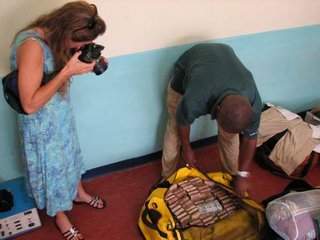
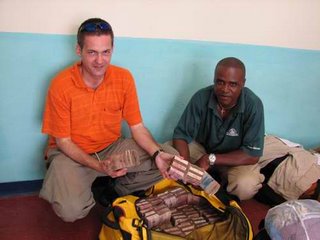
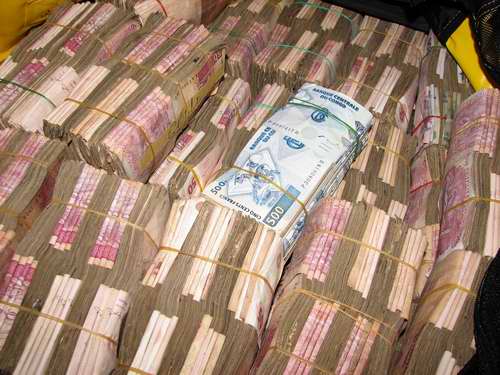
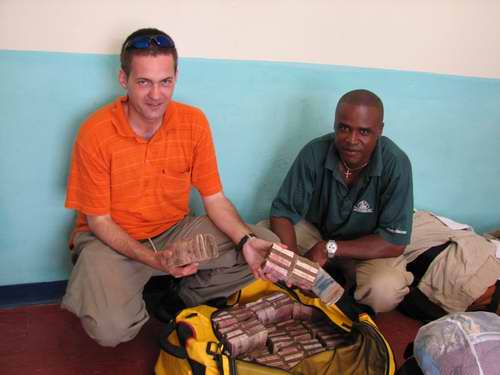
Cash flow
With no ATMs in the forests ahead of us, cash is the way to go. And lots of it. It is not as much as it looks like, though. The Congolese Franc is not one of the stronger currencies on the market - this bag, I am told, contains about 5,000 USD.


Sunday, September 17, 2006
Curious facts
Did you know that Mbandaka was founded by Stanley in 1883 with the name of Equateur?
Find out more about this town in Wikipedia.
Find out more about this town in Wikipedia.
Sunday - luggage day
Earlier today people were busy packing lots of luggage. You have to imagine the heat, humidity and copious perspiration that goes along with the pictures below...
 Me and most of my stuff.
 Me and most of my stuff.
 Bienvenue and Sally.
 Packing and re-packing.
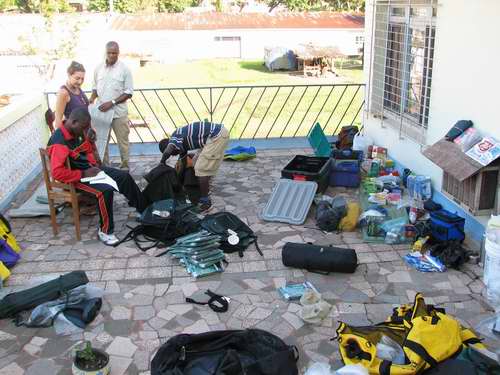
Can we get all this back into the bags?!
Sunday evening on the river
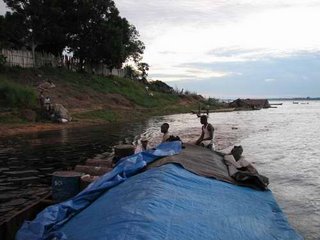
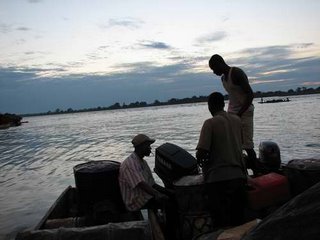
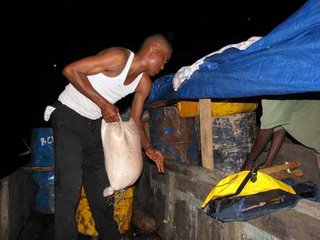
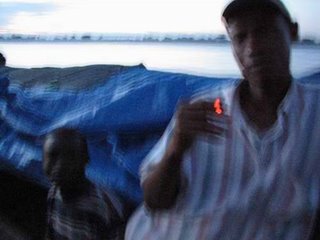
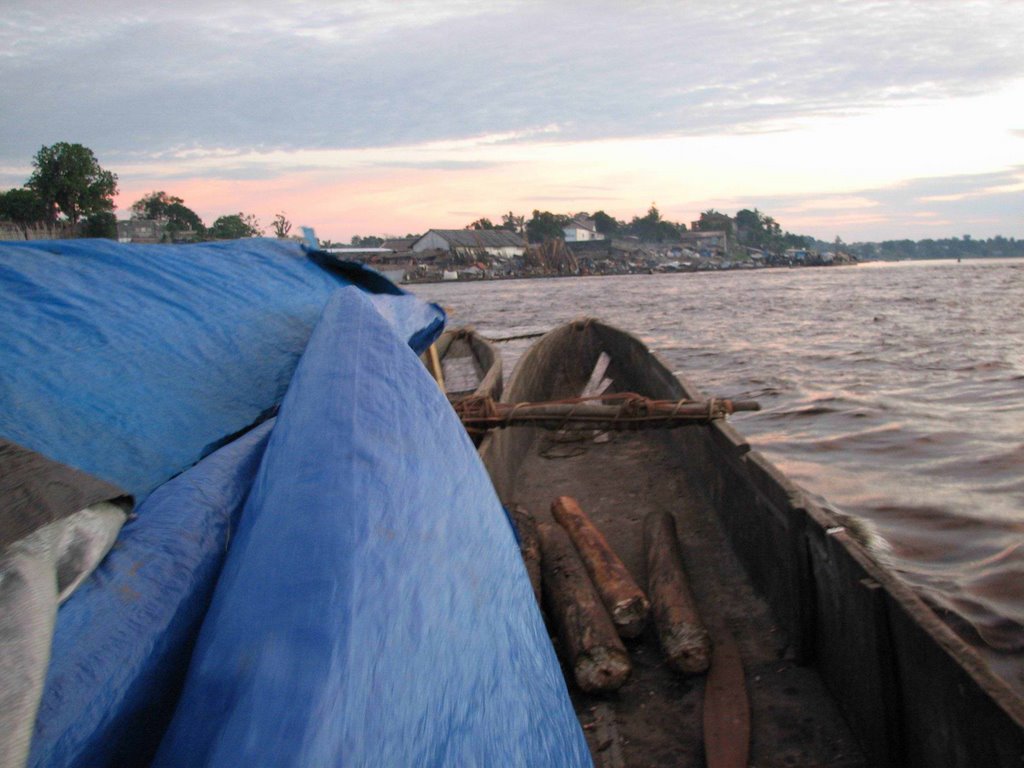
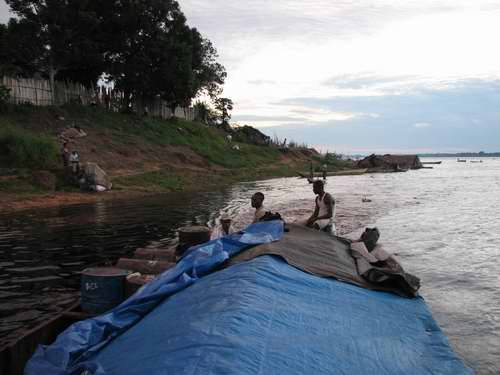
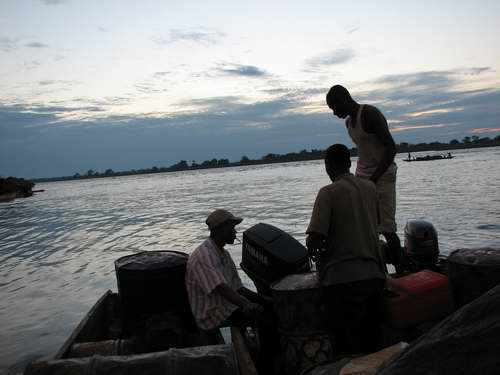
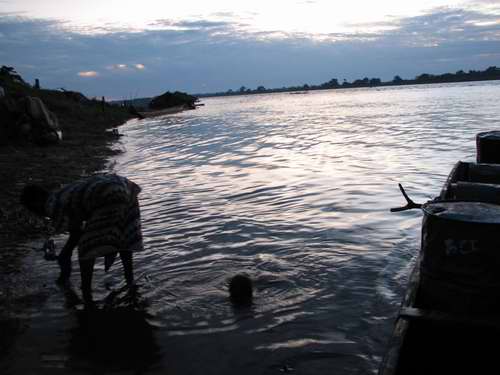
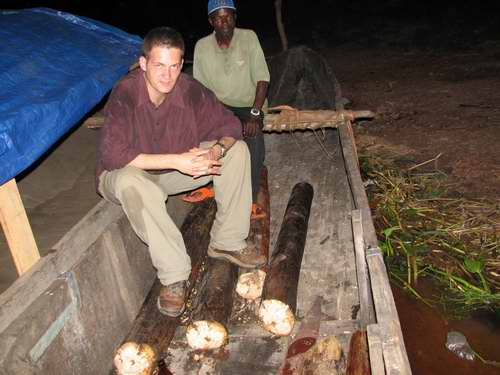
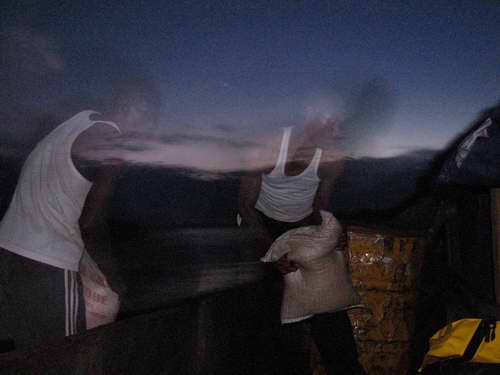
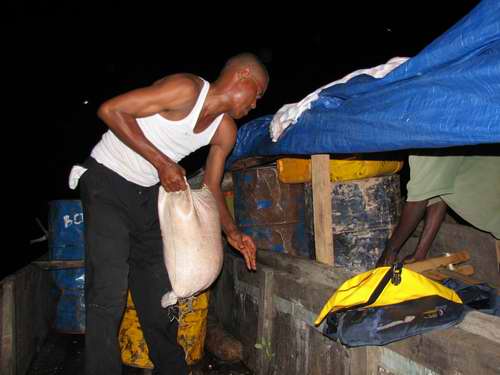
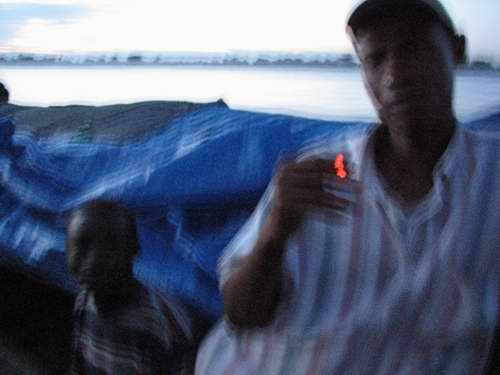
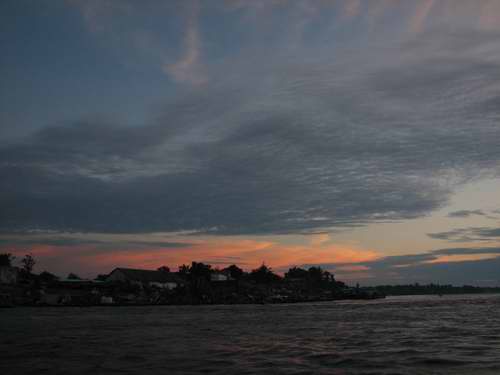
Here are some pictures from this evening - our boat is getting ready for departure and to demonstrate it Le Blanc took me for a quick spin on the river. Then more than 20 sacks of salt were taken on board. Looks like we might leave Mbandaka tomorrow.










Subscribe to:
Posts (Atom)